AI in practice
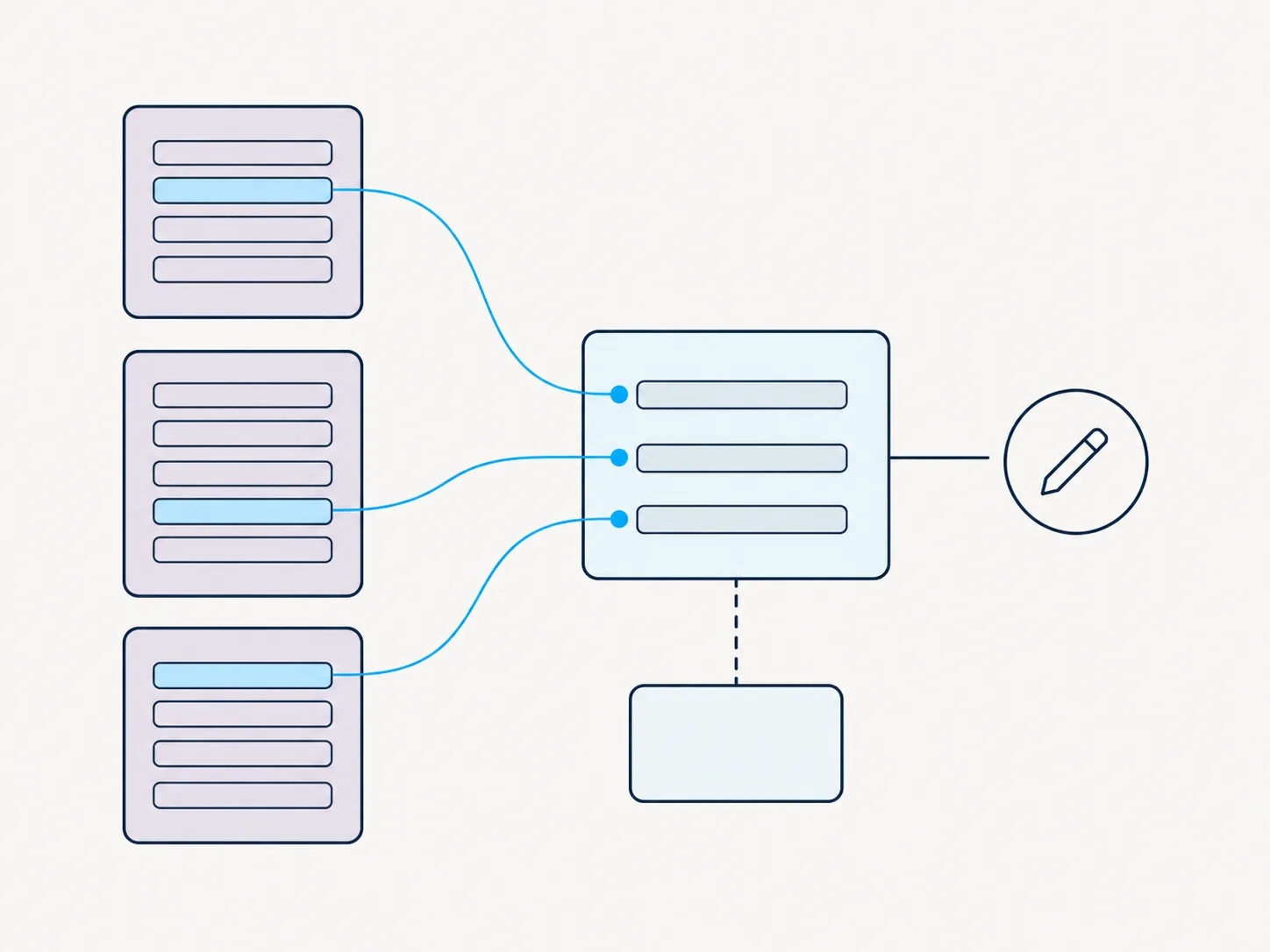
AI compresses the distance between a question and evidence
This is how it shows up in my work day to day: what it speeds up, what it never replaces, and where it is designed into the experiences themselves.
How I use it
Four places it earns its keep
Research synthesis
Hours of interview notes become themes the same day, so the team debates findings, not transcripts.
I de-identify transcripts, then use AI to suggest clusters and contradictory evidence. Every theme is traced back to the raw passages before it is shared. What counts as a finding is never delegated.
Seen in: Making a banking platform legible to the people building it, Connecting customers to the right banker the first time
Prototypes as arguments, faster
A working future-state prototype in days rather than weeks, early enough to change a decision.
Blueprint moments, pattern rules and content constraints become prompts for small code prototypes. Each exists to answer one decision, so generated decoration and production architecture are thrown away. Designers and engineers check the interaction before it becomes a delivery direction.
Seen in: Making AI part of how designers work, not just what they ship, Making a banking platform legible to the people building it, Replacing a spreadsheet the business depended on
Pattern and framework development
Reusable patterns documented and tested across more scenarios than a team could cover by hand.
AI generates the combinations of permissions, stale data, interruptions and difficult content a pattern must survive. Designers check those cases against research, policy and technical constraints. The design system stays the source of truth for components and behaviour.
Seen in: Making good design judgement the default across eight squads, Making AI part of how designers work, not just what they ship
Workshop preparation and sense-making
Sessions start with a sharper question and end with a decision captured the same day.
AI compresses source material into a draft pre-read; I verify every claim and add the decision the session must reach. In the room it groups notes and exposes unresolved positions. I record the decision, owner and dissent myself.
Seen in: Making a banking platform legible to the people building it, Helping agencies see what moving to nsw.gov.au would take
What I hold to
Rules I apply before the tool
Faster to evidence, not faster to answers
The value is getting from a question to something checkable sooner. It does not replace the question, the judgement about what counts as evidence, or the conversation that follows.
The source stays human
Interviews, observation and the people doing the work remain the primary material. AI helps me get through it; it is not a substitute for it.
Speed is only useful upstream
Faster screens late in delivery change little. Faster evidence and prototypes early in a program change what gets built.
Show the working
Anything AI-assisted is checked, attributed and reproducible. If a finding cannot be traced back to a person, it is not a finding.
AI in the product
Where AI is part of the service, not just the process
This is the newest and least mature part of my work. In Digital Banker discovery I explored assistive concepts that summarised customer context before a banker conversation: visible sources, banker correction, and an empty state when evidence was incomplete. Autonomous decisions and credit judgement were left out.