OneCXNSW Government · 2020 – 2021 · 4 min read
Helping agencies see what moving to nsw.gov.au would take
An assessment hub that let agencies judge their own readiness, so consolidation conversations started with evidence.
Role card
- Project
- OneCX
- Role
- UX Lead
- Stage
- Lead
- Organisation
- NSW Government
- Sector
- Government
- Duration
- 2020 – 2021
- Themes
- Making complexity legible; Shaping decisions, not just solutions
In sixty seconds
Situation
OneCX was consolidating agency websites into nsw.gov.au, but agencies began from different content, technical and governance conditions. A mandate alone could not show what each move would require.
Reframe
We changed the question from ‘When must this agency move?’ to ‘What evidence shows it is ready?’ I led the self-assessment hub.
Outcome
Agencies could assess their own position before consolidation planning began. The hub gave program and agency teams a shared evidence base; adoption was observed, while effects on migration time were not measured.
Ask Orko about this studySite guide
Short, scripted answers drawn from this page. Pick a question to open them.
Team and scope
Team
Me as UX Lead with a small design team; OneCX program, content, technical and agency partners.
Scope
I owned experience and design direction, shared readiness criteria and directed the designers. I did not own the mandate, migration decisions, technical delivery or agency content governance.
Confidentiality
The readiness map and assessment approach are recreated; agency positions, internal criteria and program discussions are generalised. Page crops are from the public site as published in 2020; the live pages have since changed.
01
The situation and the stakes
OneCX aimed to consolidate NSW agency websites into nsw.gov.au. Differences in content volume, publishing practice, technical dependencies and ownership meant one migration approach risked weak plans, resistance and disrupted public information.
Program teams needed readiness evidence; agencies needed a practical way to prepare before entering the pipeline. Without it, the first formal conversation could feel like an imposed mandate and missing evidence could become debate instead of early preparation.
02
The reframe
Readiness had been something the program determined after an agency entered the pipeline. Agencies already held much of the evidence about content ownership, complexity and technical dependence, but lacked a common frame for comparing those conditions and deciding what to do next.
I reframed assessment as a service agencies could use themselves. The hub explained criteria, located their current position and identified preparation, so formal planning could start with evidence rather than mandate.
03
What I did, and what I chose not to do
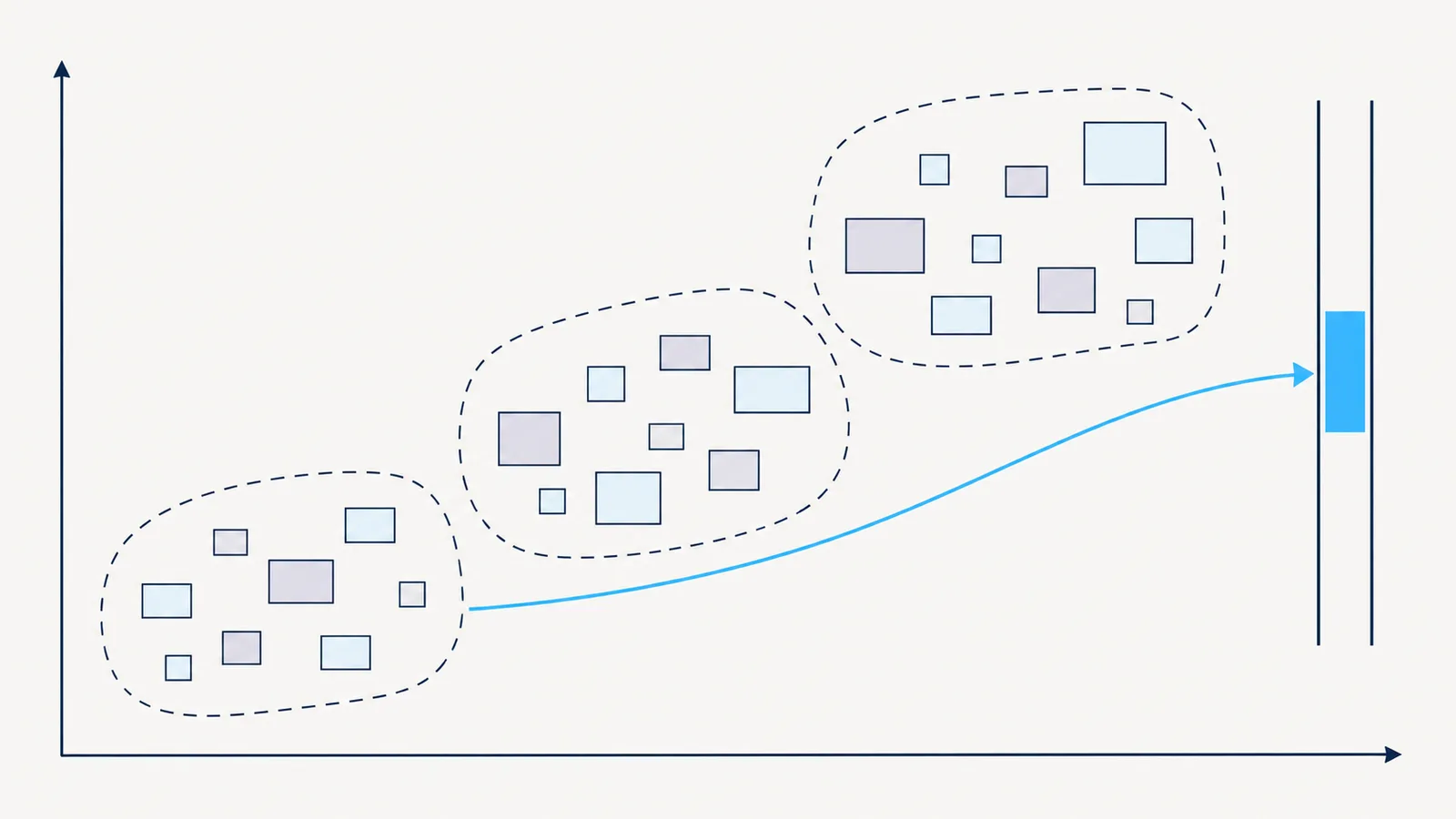
I mapped readiness across content complexity and technical dependence, translating program knowledge into questions agencies could answer from evidence already held across their teams. The hub connected assessment and interpretation to preparation, not pass or fail.
Likely site profiles tested whether the model separated straightforward content moves from deeper dependencies. I directed interaction and content principles while designers developed journeys; program, content and technical specialists challenged criteria that concealed substantial work.
I did not automate migration-wave allocation because agency answers still required discussion and a calculated wave implied unsupported certainty. Wave planning stayed with the program; the hub improved its evidence.
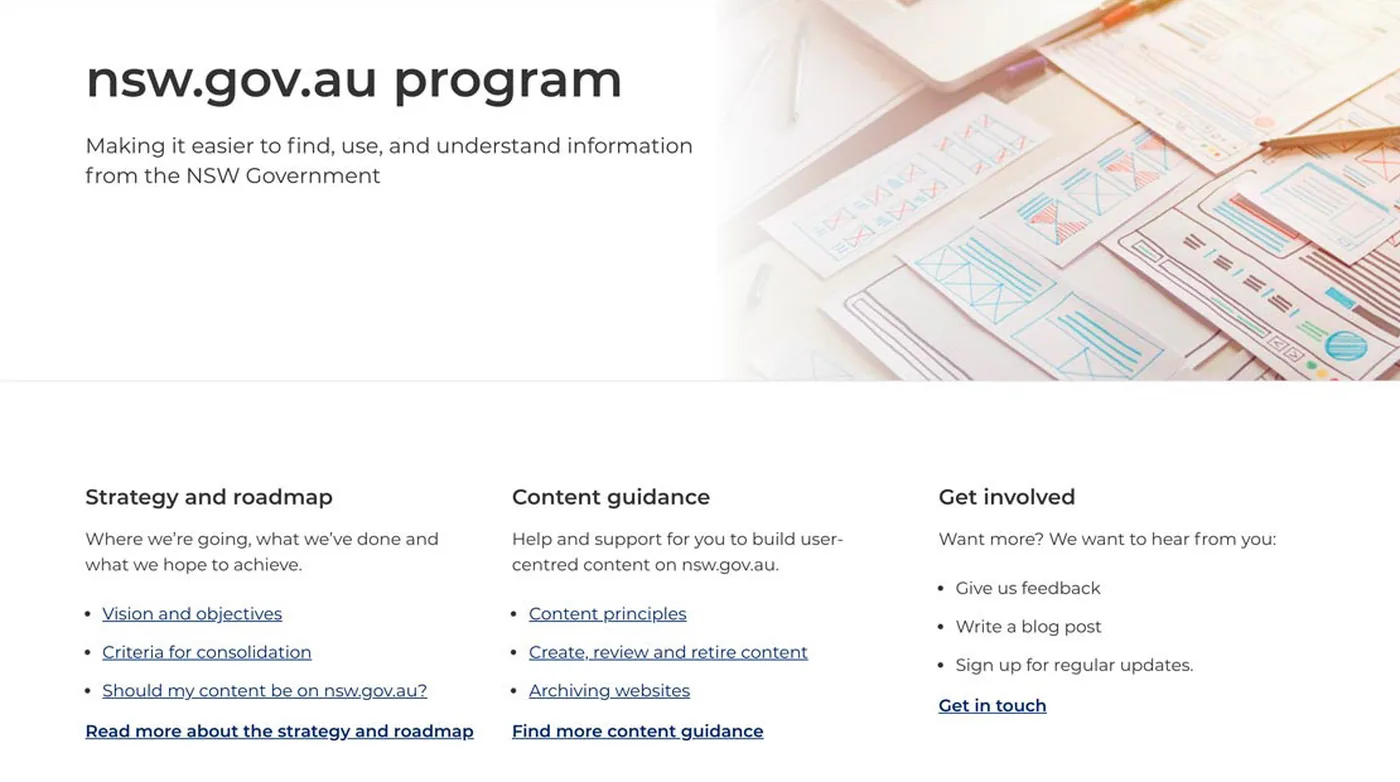
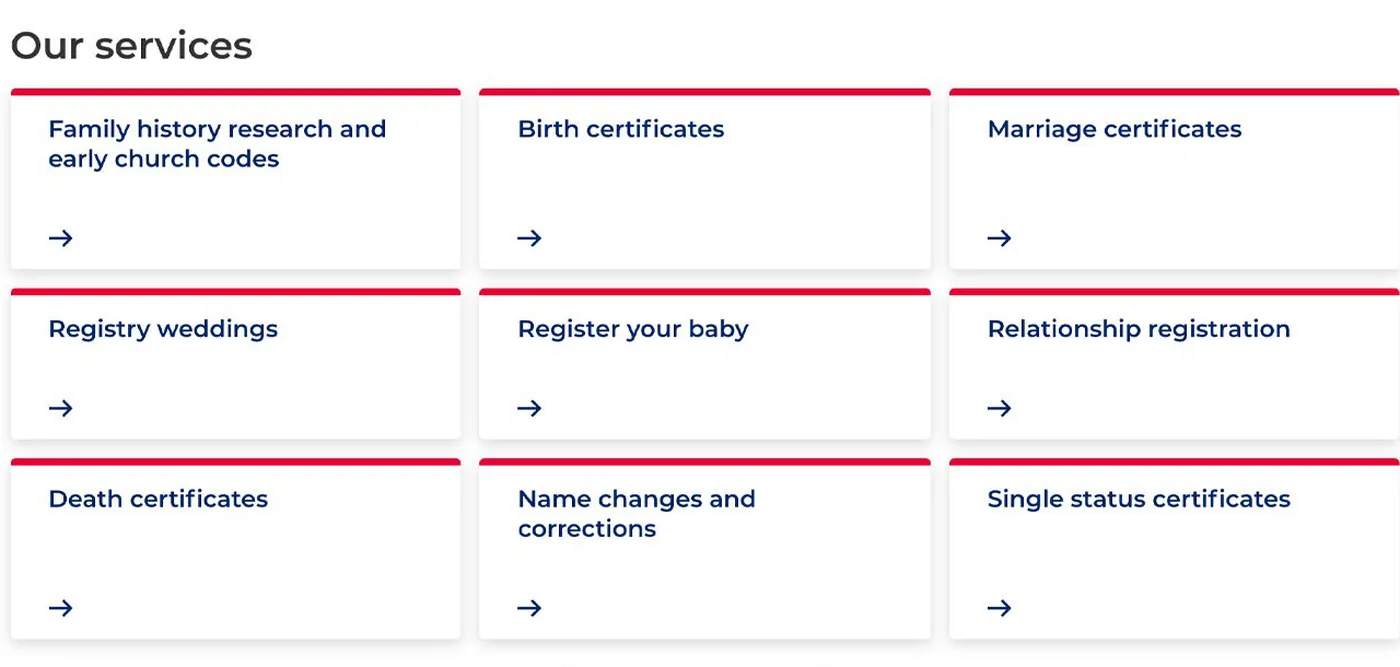
The Registry of Births, Deaths and Marriages was the first agency to move and our test of the criteria. I facilitated stakeholder and subject-matter workshops, then co-designed journeys so certificates, registrations and weddings used shared nsw.gov.au patterns rather than copying the old site.
04
What changed
Agencies could judge readiness and identify preparation. The hub gave agency and program teams a shared vocabulary for content and technical conditions; this case does not claim a measured reduction in migration effort.
Assessment moved earlier, so program conversations began with agency evidence and open questions rather than the mandate. Different migration profiles became visible without labelling an agency simply ready or unready, while preparation could begin before wave planning. Agency teams could start that work immediately.
- EmployeeObserved
- Agency teams could assess content and technical readiness before entering a formal consolidation conversation.
- OrganisationObserved
- The hub gave agencies and the OneCX program a shared evidence base for preparation and migration planning.
05
What I carry forward
A mandate works better when teams can see their evidence first. In platform consolidations, I now make criteria explicit, let teams locate themselves against them, and pilot the criteria on the easiest and hardest cases before broad use.