ESG Risk AssessmentWestpac · 2022 – 2023 · 3 min read
Digitising ESG risk assessment inside the lending process
A spreadsheet assessment emailed around the bank became a step inside the lending process, expected to cut assessment effort by around 90%.
Role card
- Project
- ESG Risk Assessment
- Role
- Lead designer
- Stage
- Senior
- Organisation
- Westpac
- Sector
- Banking
- Duration
- 2022 – 2023
- Themes
- Designing the whole service, not the interface
In sixty seconds
Situation
An ESG credit-assessment spreadsheet moved by email outside the lending journey. Re-keying its answers added effort and separated risk evidence from the credit decision.
Reframe
The task was not digitising a questionnaire. The assessment needed to become a governed lending step, passing information to and from core systems.
Outcome
We designed an integrated digital journey expected to reduce assessment effort by around 90%. That reduction remains projected, not a measured result.
Ask Orko about this studySite guide
Short, scripted answers drawn from this page. Pick a question to open them.
Team and scope
Team
Me as lead designer, with a product owner, business analyst, engineers, ESG risk and credit specialists, and business bankers.
Scope
I owned the end-to-end experience, synthesis, service flow and interaction design; shared policy and integration decisions. I did not own ESG policy, credit decisions, architecture approval or benefit measurement.
Confidentiality
The flow and operational detail were recreated or generalised; no customer data or internal system names are shown.
01
The situation and the stakes
ESG risk assessment sat beside the main business-lending journey. A spreadsheet was emailed, completed separately and returned for re-keying. This created delay and made the assessment harder to trace alongside the credit decision.
Bankers and risk specialists carried the operational burden, while the bank needed consistent evidence that required questions were answered and reviewed. Simply making the spreadsheet easier to use would preserve the side-loop, its repeated handling and its weak connection to lending data.
02
The reframe
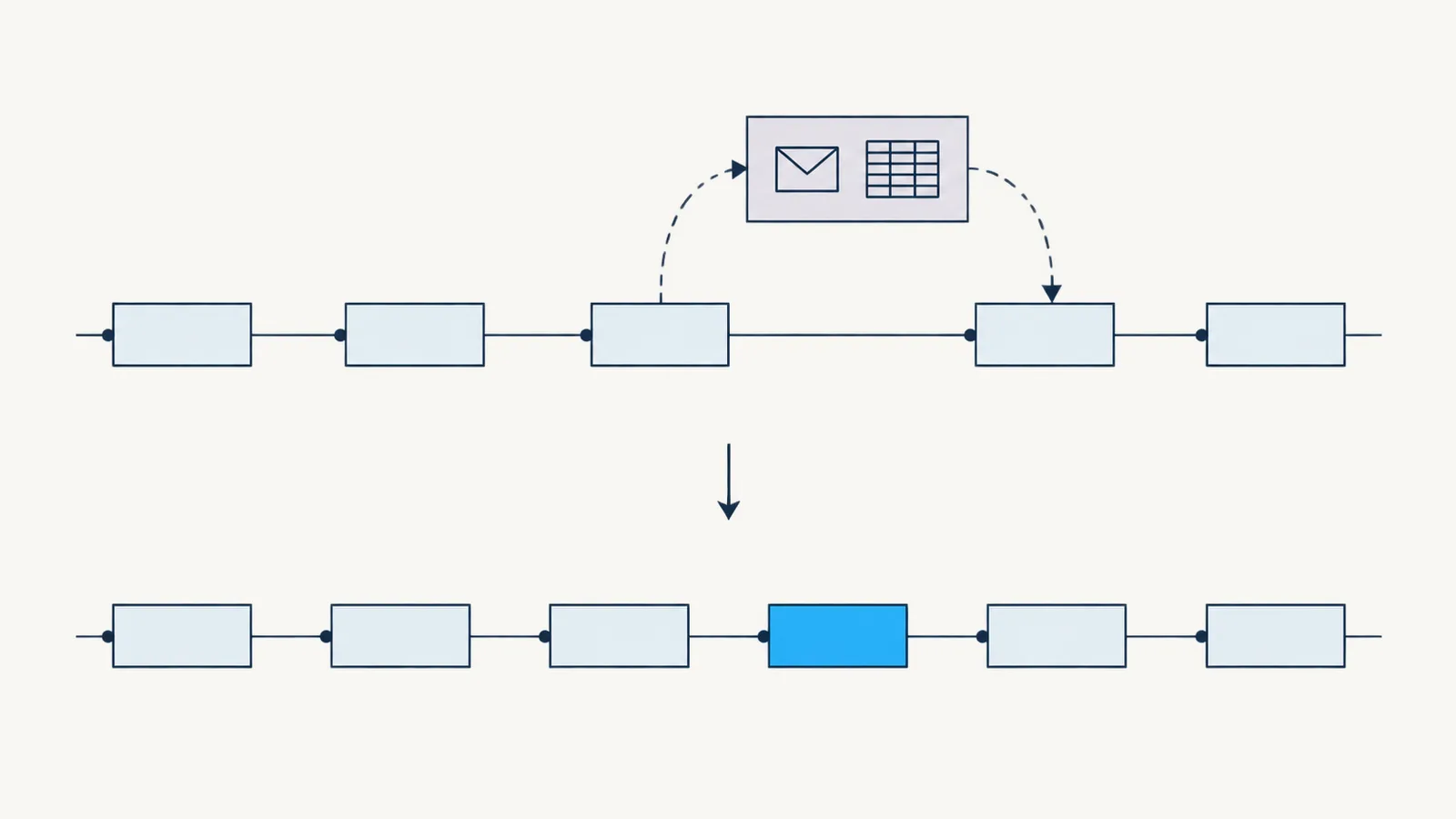
A digital replacement for the spreadsheet itself would not solve the problem. Mapping exposed repeated information, email handoffs and re-keying between the assessment and the main lending process. The greater issue was where the assessment lived and how its evidence travelled.
I reframed it as an integrated lending step, not a standalone questionnaire. Known information would enter from core systems, while completed responses and status would return to the lending record. That decision joined experience, policy and integration work around one future flow, with clear movement in both directions.
03
What I did, and what I chose not to do
I traced the current assessment with bankers, risk specialists and credit specialists. We separated policy-required evidence from spreadsheet conventions and marked where the same information was entered again. I then designed a guided flow showing progress, relevant questions and a clear return to the lending journey.
The team defined how existing data could pre-populate the assessment and how its outcome would be recorded. I did not automate risk judgement because accountable specialist review remained necessary. Uncommon exception paths were deferred until the core integration was proven, avoiding a larger build based on poorly understood cases.
04
What changed
The design replaced the emailed side-loop with a lending step integrated with core systems. Known information could enter the assessment, reducing the need to reconstruct a case from separate records. The intended reduction in assessment effort was around 90%.
That figure was projected from the future process, not measured after release. The organisational change was the committed integration direction: ESG evidence would sit within the lending journey and its record rather than travel separately as an attached spreadsheet.
- EmployeeProjected
- Integrating the assessment with core systems was expected to reduce assessment effort by around 90%.
- OrganisationCommitted
- The future process committed to recording ESG assessment evidence within the lending journey instead of an emailed spreadsheet loop.
05
What I carry forward
A spreadsheet moving by email shows where a process lacks a home. Following the information placed this work inside lending, with evidence travelling with the decision. For any 'digitise this' request, I locate the information and its owner, design the step and integration together, and agree the measurement baseline before fixing scope or estimating benefits.