DB · Sales Service blueprintWestpac · 2024 – present · 4 min read
Making a banking platform legible to the people building it
A service blueprint that changed what the program consolidated first: the handoffs behind the tools, not the tools.
Role card
- Project
- DB · Sales Service blueprint
- Role
- Principal Experience Designer
- Stage
- Principal
- Organisation
- Westpac
- Sector
- Banking
- Duration
- 2024 – present
- Themes
- Making complexity legible; Designing the whole service, not the interface
In sixty seconds
Situation
Digital Banker was consolidating banker tools into one platform. Migrating interfaces without understanding their owners, policies and handoffs risked preserving the hardest work.
Reframe
A five-lane blueprint showed that the largest breaks sat between systems. Program leadership prioritised three handoffs where information was re-keyed or lost.
Outcome
The blueprint changed program sequencing and became a shared reference across product, operations, policy, data and technology. Customer effects remain projected while delivery continues.
Ask Orko about this studySite guide
Short, scripted answers drawn from this page. Pick a question to open them.
Team and scope
Team
Me as principal; two product designers, a content designer, researchers, product managers, engineers and subject-matter experts across eight delivery squads.
Scope
I owned discovery, synthesis and the blueprint; shared future-state decisions across functions. I did not own funding, policy, architecture or delivery sequencing.
Confidentiality
The blueprint, handoff structure, quotes and operating detail were recreated or generalised; no customer data or internal system names are shown.
01
The situation and the stakes
Digital Banker aimed to unite fragmented banker tools. Bankers needed less searching, re-keying and chasing; customers needed fewer pauses while the bank reconstructed information it already held.
Tool-by-tool migration could hide broken handoffs behind a cleaner interface. Each squad could optimise its surface while the service between squads remained nobody’s problem, preserving the effort the program intended to remove.
02
Why it was hard
The work crossed five views: customer, banker, operations, policy and data, and technology. Each used different boundaries, language and meanings of ‘complete’: submitted, checked, approved or visible in another system.
Evidence was distributed across bankers, operational specialists and technical teams. We also had to distinguish protective controls from workarounds caused by incomplete information or unclear ownership; simplification could otherwise weaken a control or move effort out of sight.
03
The reframe
Consolidation had meant moving the most-used tools into one place first. That made migration volume visible but left service quality implicit.
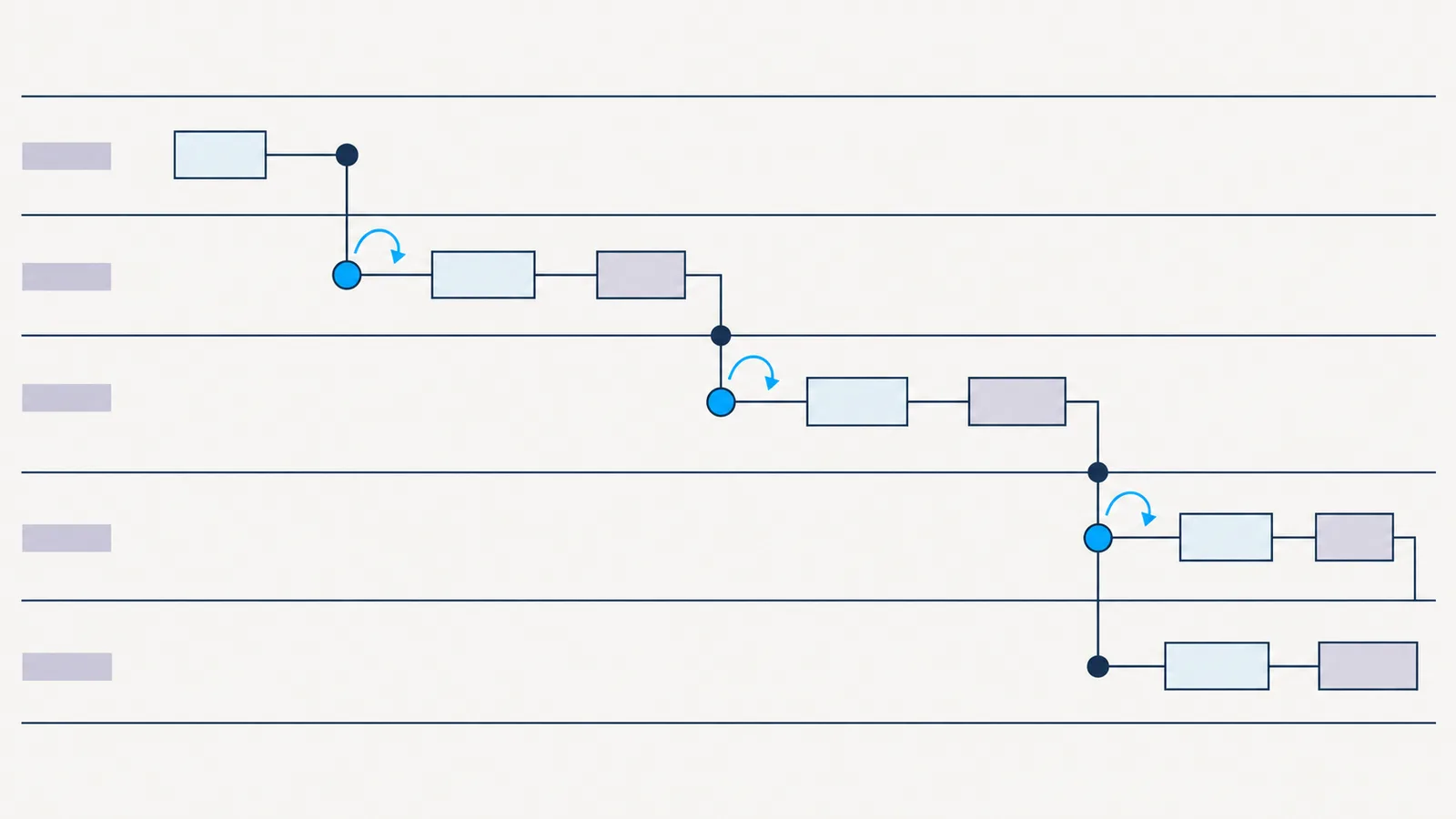
I mapped one lending journey across five lanes and traced information through seven handoffs in the recreated structure. Three re-keying points concentrated follow-up, uncertainty and avoidable checking.
The question changed from ‘Which tool moves first?’ to ‘Which service break disappears first?’ Program leadership prioritised the three handoffs before broader interface consolidation, giving product, architecture and operations a shared order without pretending every dependency was settled.
04
What I did, and what I chose not to do
I organised discovery around unknowns, interviewing bankers and specialists and walking live work with synthetic examples. Each inferred handoff was checked with its sender and receiver, then marked observed, reported or assumed.
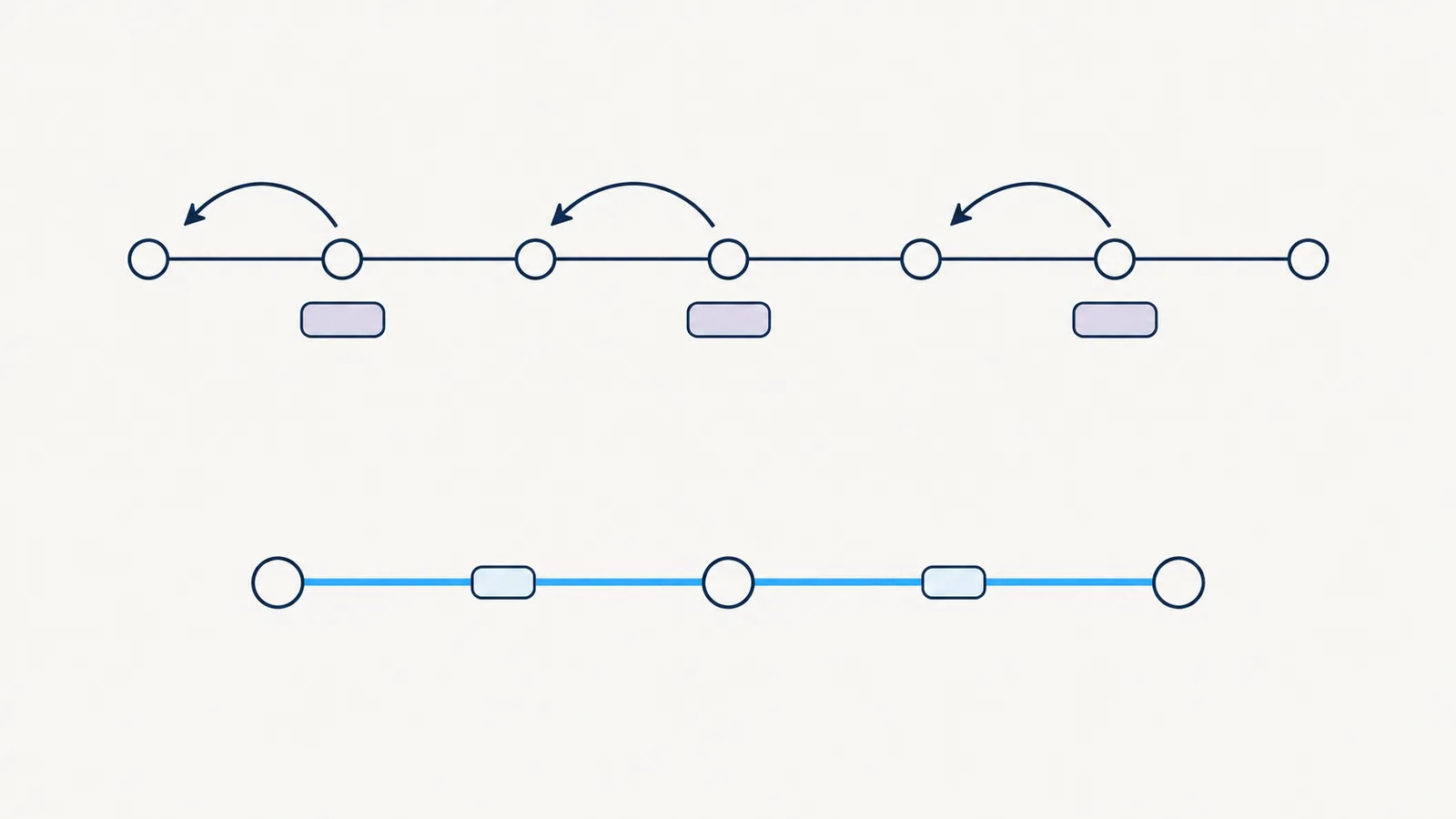
I layered the blueprint from people and work to policy, data, systems and evidence strength. We modelled seven handoffs becoming three by carrying verified context forward, then proposed ‘guide, hand off, close the loop’ for movement between Digital Banker and the origination system; it has not been implemented uniformly.
I did not design a complete target interface, blueprint every lending variation or score teams against the map. These would create false certainty before policy, data access and architecture decisions were settled, or turn dependency mapping into blame.
05
How I brought people with me
People had to recognise their service in the blueprint. Lane-by-lane playbacks let bankers, operations specialists, policy partners and engineers correct details before product, operations, policy, data and technology leads named what they received, trusted, changed and owned at each break.
The leadership session sought a sequencing decision, not agreement. Leaders chose between two orders and prioritised shared handoffs; later, squads used the blueprint in briefs and dependency conversations without my facilitation, an observed adoption signal, though consistency across all eight squads was not measured.
“This is the first view that shows where our tool ends but the work does not.”
06
What changed
Tool migration was recast around three cross-squad handoffs, with named product, operations and technology participation. Verified context travelling with work and one visible owner for exceptions became committed direction; reduced re-keying remained projected while delivery continued.
Customers were expected to repeat less context and face fewer unexplained pauses, but this was not measured. Designers also considered customer, banker and operational consequences in briefs and critiques; this was observed, not measured across all eight squads.
- CustomerProjected
- Removing three re-keying points projected less repetition and fewer pauses; delivery continued and customer perception remained untested.
- EmployeeCommitted
- The future-state direction committed to carrying verified context forward, showing its source and giving each exception one visible owner.
- BusinessCommitted
- Program leadership committed to prioritising three shared handoffs before broader tool migration, changing the sequence of discovery work.
- OrganisationObserved
- Squads used the blueprint in later discovery briefs and dependency conversations without principal-led facilitation, and added open questions to it.
07
What I carry forward
I now make a whole-service map the first deliverable in consolidation. Showing every handoff turns sequencing from negotiation between tool owners into a decision about which break to remove first; an evidence register beside it keeps every line challengeable as policy and architecture change.