3 July 2026 · 4 min read
Research synthesis with AI, without losing the source
AI can shorten research synthesis, but every finding must remain traceable to a person. Speed matters only when the evidence survives it.
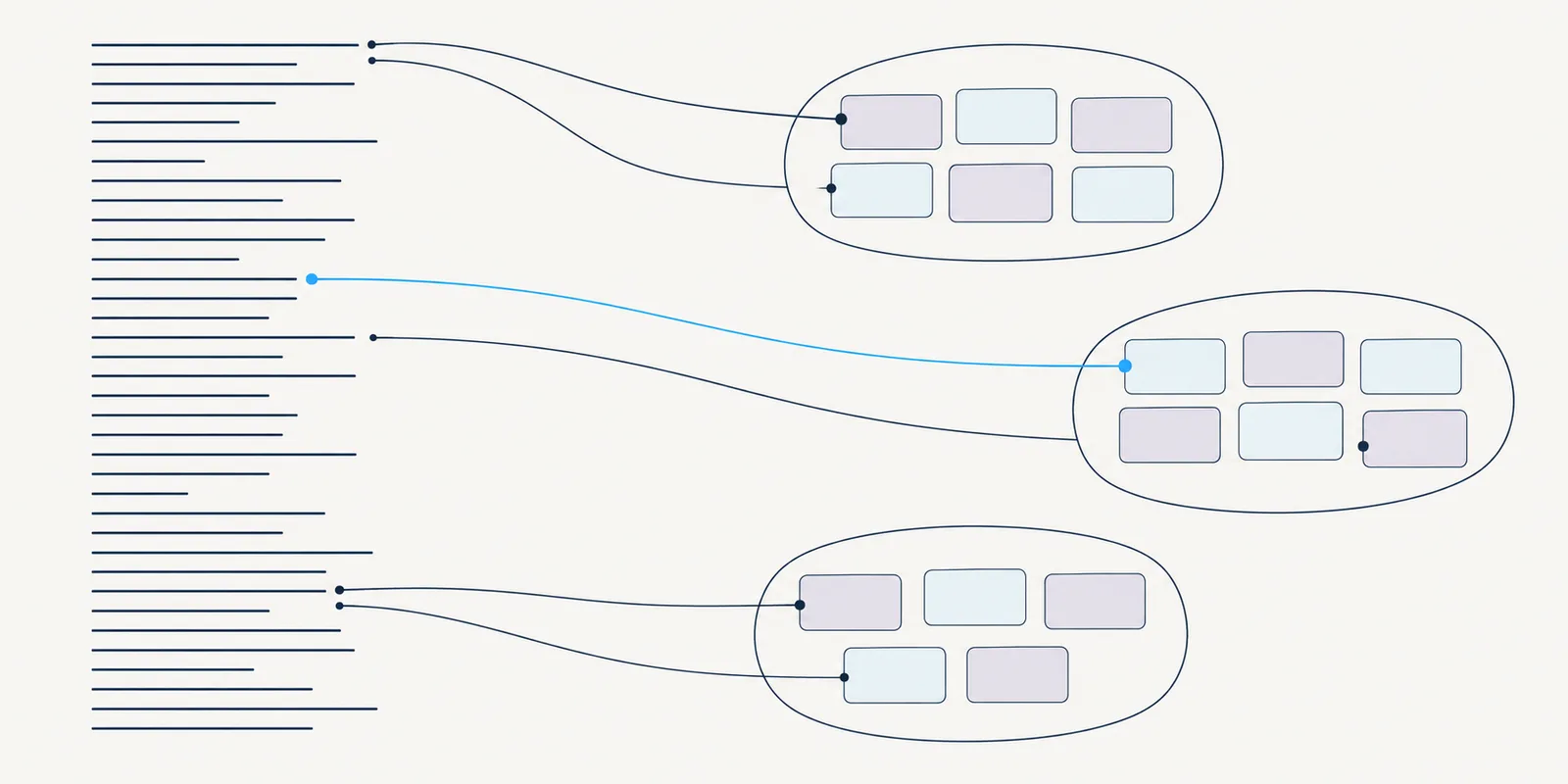
Research synthesis is slow for a good reason. Meaning sits in context, contradiction and the difference between what someone says and what they have to do. Speeding up the handling of material is useful, but speeding past those distinctions is not.
I use AI to reduce the distance between a transcript and a set of themes worth examining. I do not use it to manufacture certainty. My test is simple: if I cannot trace a finding back to a person and passage, it is not a finding.
Prepare the material first
I begin by removing names, account details, locations and other identifying information. I follow the organisation's approved environment, retention rules and research consent. If the material cannot be handled safely within those conditions, I do not use AI for it.
Next, I divide transcripts into coherent sections rather than arbitrary token-sized pieces. Each section keeps a coded participant reference, question context and line reference. This preserves enough surrounding conversation to check what a phrase meant later.
I also write the research question and known sampling limits before clustering begins. Otherwise, a fluent summary can quietly widen a narrow study. Six bankers discussing one workflow remain six bankers discussing one workflow, however confident the prose sounds.
Cluster, name, then return
I ask AI to suggest clusters across the de-identified sections, including contradictory evidence and cases that fit nowhere. The output is a sorting proposal, not an analysis. I move passages, split weak groups and discard clusters that merely repeat the interview guide.
I then name each theme in plain language. A useful theme describes a pattern with consequence, such as employees delaying a decision because source data cannot be trusted. A label such as ‘data challenges’ hides the behaviour and is too broad to guide action.
Then I go back to the raw transcripts. For every theme, I reread each supporting passage with its surrounding exchange. I check whether the claim holds, whether an opposing case changes it, and whether the evidence supports frequency, severity or only possibility.
This return is where much of the judgement sits. Similar language can describe different needs, while different language can describe the same constraint. AI can propose proximity; the researcher decides whether that proximity means anything.
“If I cannot trace a finding back to a person and passage, it is not a finding.”
What stays human
I never delegate the interview. Listening includes noticing hesitation, following an unexpected detail and recognising when the planned question is wrong. A transcript records words, but it does not contain the full relationship that produced them.
I also keep the judgement about what counts as evidence. Repetition is not automatically importance, and a single account can expose a serious risk. Context, research quality and the decision at hand determine the weight I give a passage.
The conversation with the team stays human too. Findings become useful when product, operations, risk and technology test them against what they know. Disagreement often reveals a policy exception, an operational constraint or a question the research did not cover.
AI can help prepare that conversation, not replace it. I may use it to compare themes or draft a concise pre-read. I verify every claim and make the limits visible before anyone is asked to act.
Make trust inspectable
A sceptical risk or legal stakeholder should not have to trust the tool or my confidence. I present a short method note: what material was used, how it was de-identified, where it was processed, what AI did and what I checked. I also state what was excluded.
Each finding carries a participant count, representative excerpts and references back to the source. I distinguish a direct observation from an interpretation and a design implication. Contradictory evidence appears beside the theme rather than being cleaned away.
When appropriate, I invite stakeholders to inspect the evidence chain for one finding. They can move from the claim to coded excerpts and then to approved source material. That small audit is more credible than saying a model was accurate.
I describe the work as AI-assisted synthesis, not automated research. This is not a disclaimer added at the end. It tells the reader where acceleration occurred and where human responsibility remained.
When I leave it out
My rule of thumb is not to use AI when I cannot safely share the material, preserve context or check the output against the source. I also leave it out when the dataset is small enough that the setup would add distance rather than save time.
Highly sensitive interviews need particular care. Trauma, health, employment matters and identifiable financial circumstances can make the cost of exposure or misreading too high. An approved tool does not remove my responsibility to consider the participant's expectation.
Used with discipline, AI gives me more time to examine evidence and involve the team. Used carelessly, it produces themes that look finished before they have been understood. The gain is faster access to checkable evidence, not faster answers.